Project planning for a fast-track pipeline project
Purpose of the project
Ditio supports a major client in the offshore sector with multiple schedulers within the scheduling department, focusing on project management in terms of time and manpower.
The project involves the construction of a 120-kilometer-long pipeline with a diameter of 16 inches (406 mm), which will be installed in water depths ranging from 1,850 to 2,550 meters. The pipeline crosses an existing pipeline from another field, for which a special structure—a bridge—will be built to prevent damage to both pipelines.
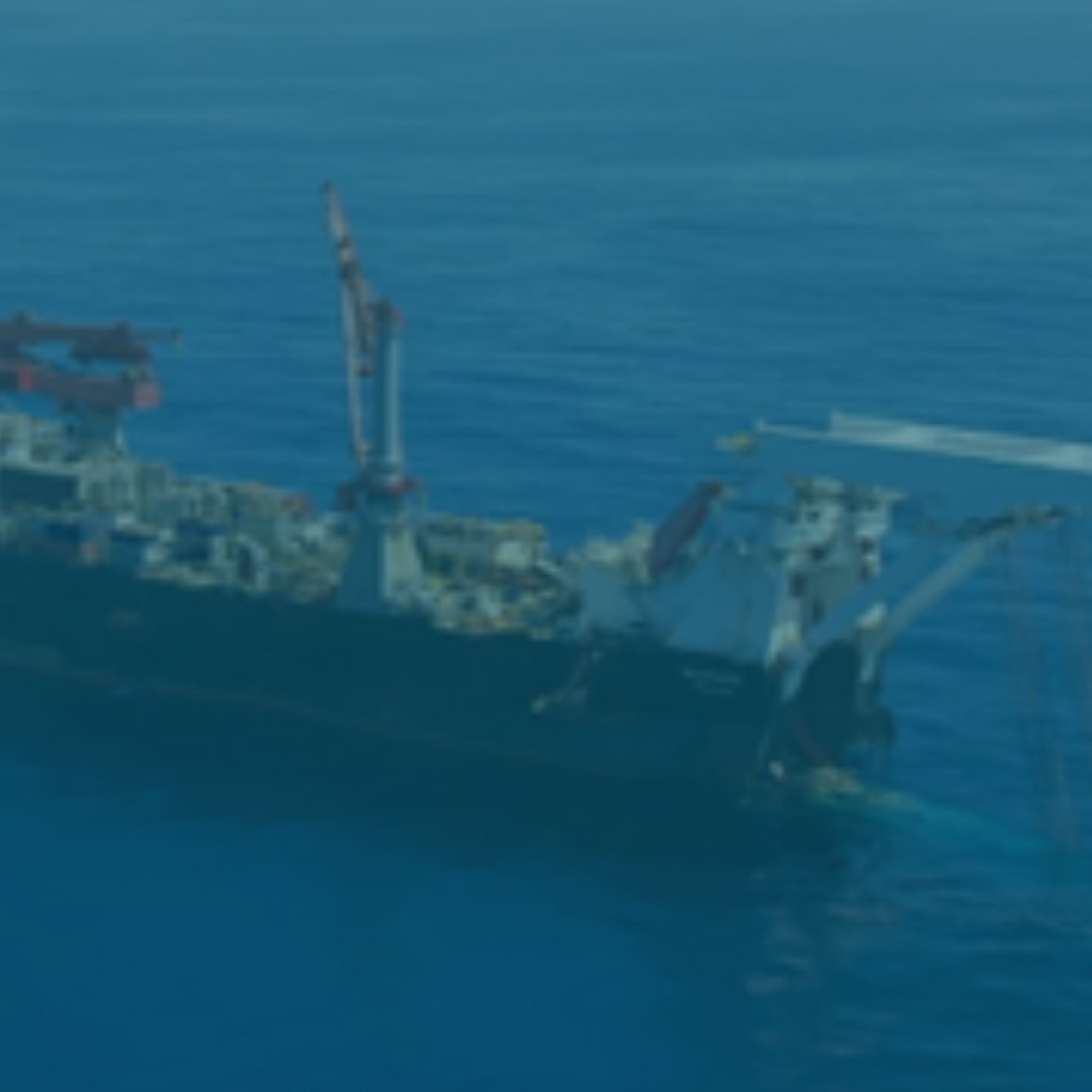
The pipeline will be laid using a pipelay vessel and is intended to transport oil from the offshore field to the mainland, where it will be connected to an existing manifold at a water depth of approximately 85 meters.
Ditio's Expertise
As planning engineers, Ditio translates all available project data into a comprehensive and manageable schedule. This schedule serves as the basis for monitoring progress and tracking critical paths.
As part of this project:
- activities are scheduled in a logical order,
- S-curves are used to visualize progress and costs,
- and manpower histograms are used to monitor capacity utilization and budgets.
This approach provides insight into both the timeline and resource allocation, which is essential in a fast-track environment.
Challenges and solutions
This project got off to a challenging start. It was originally assigned to another contractor who was unable to meet the contractual requirements. As a result, the project came under significant time pressure, despite an already full order book.
To address this issue, the allocation of available resources was reviewed. As a result, it was decided to free up the pipe-laying vessel by spreading maintenance work over several periods. In conjunction with seasonal planning, a time slot was identified that aligns well with the project’s engineering phase.
Thanks to this integrated approach to planning, capacity, and execution, the project was able to be launched and continued in a controlled manner.
Results
Thanks to the close collaboration between project management and engineering:
- a realistic and widely accepted baseline plan was quickly drawn up,
- the client accepted this schedule immediately,
- and the project is currently ahead of schedule.
Progress is updated monthly, with delays and risks identified and discussed in a timely manner. Thanks to this proactive management, bottlenecks are quickly resolved and the project remains under control.
What did we learn in this project?
This project confirms that a well-structured schedule is a powerful management tool.
However, this is subject to the condition that the schedule:
- is logically structured,
- contains clear dependencies,
- and aligns with the organization's Work Breakdown Structure (WBS).
Only then will everyone involved understand where activities belong and how they contribute to the bigger picture. This makes it possible to make decisions more quickly, collaborate more effectively, and manage risks in a timely manner.